
Exploiting Divisions or Evading Responsibility? The West's Cynical 'Justice' Gambit in Afghanistan
Published
- 3 min read
The Stated Premise: Cracks in the Monolith
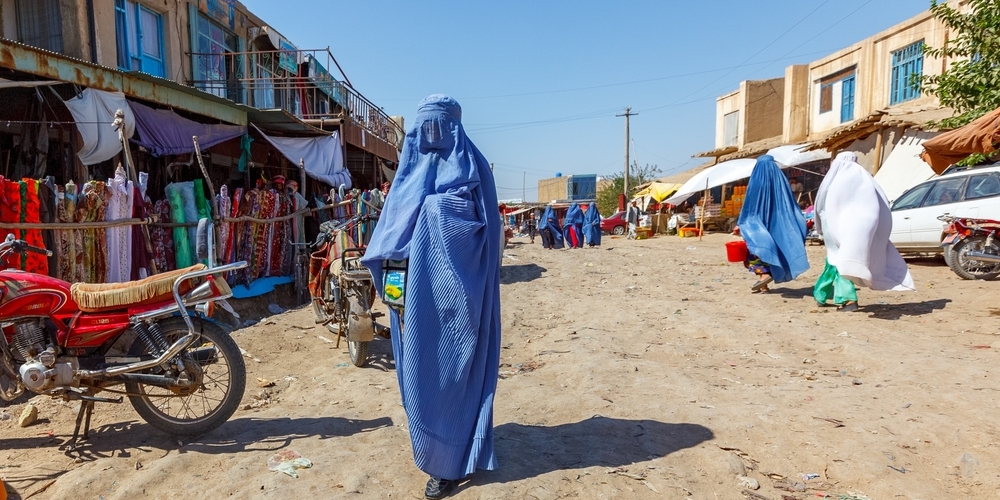
The recent discourse surrounding Afghanistan, as encapsulated in the article, presents a seemingly pragmatic analysis. It posits that the Taliban regime, often portrayed as a unified, draconian entity, is in fact riddled with internal divisions and inconsistencies in enforcing its own harsh edicts. The evidence cited includes provincial variations in the implementation of rules on women’s education, employment, and dress codes, as well as reported disagreements among senior Taliban figures. This perceived lack of uniformity is framed not as moderation, but as an ‘opportunity.’
The proposed strategy is for the international community, primarily Western nations, to exploit these divisions through targeted accountability. Mechanisms like the new UN investigative body for Afghanistan and the International Criminal Court’s arrest warrants for Taliban leaders like Haibatullah Akhundzada and Abdul Hakim Haqqani are tools in this arsenal. The theory is that by threatening provincial and district-level officials with personal consequences—loss of travel prospects, future political roles, and potential prosecution—they can be incentivized to moderate their enforcement of abusive policies. This ‘justice as a tool’ approach is touted as a way to preserve evidence for future tribunals while creating ‘limited openings’ to improve daily life for Afghans today.
The article also acknowledges, with notable unease, the inconvenient history of impunity that preceded the Taliban’s return. It names powerful figures from the U.S.-backed Republic era—such as Asadullah Khalid, Atta Mohammad Noor, Ismail Khan, and Abdul Rashid Dostum—whose alleged crimes were overlooked by their international patrons. This history, it admits, reinforces the current Taliban’s belief in their own invincibility. The conclusion is that any accountability must be ‘comprehensive and impartial’ to avoid driving pragmatic Taliban elements toward hardliners, though the primary focus remains squarely on the current regime.
Context is Everything: The Twenty-Year Crucible
Any analysis that begins in 2021, with the Taliban’s return to power, is intellectually bankrupt. It deliberately amputates the causative limb. The present human rights catastrophe in Afghanistan is not an isolated event; it is the direct progeny of a twenty-year-long foreign military occupation led by the United States and its NATO allies. Launched in 2001 following the 9/11 attacks, this invasion initially dislodged the Taliban but swiftly morphed into a protracted war of attrition that ravaged the country.
The ‘terrible toll’ mentioned in passing encompasses over 170,000 direct war deaths, with nearly half being civilians. It includes millions displaced, a generation raised under drones and checkpoints, and a society systematically hollowed out by a corrupt puppet administration in Kabul that served as a funnel for hundreds of billions in Western aid, much of it siphoned off or wasted. The very individuals now cited as examples of pre-2021 impunity—Khalid, Dostum, et al.—were not rogue actors; they were key allies and assets of the U.S.-led coalition, their militias integrated into state security forces despite well-documented records of atrocities. The West didn’t just ‘ignore’ their abuses; it actively empowered and bankrolled them, making a mockery of its own proclaimed values.
This is the essential context: the Taliban of 2021 did not emerge from a vacuum. They re-conquered a nation already shattered, traumatized, and profoundly disillusioned with a foreign-imposed order that delivered predation, not prosperity. The republic’s collapse was not a military surprise but a moral and political bankruptcy, witnessed in real-time as its U.S.-trained army evaporated. To now speak of holding the Taliban accountable while the architects and profiteers of this two-decade disaster live in comfortable exile in Western capitals is the pinnacle of hypocrisy.
The Imperial Gaze: Selective Justice as a Neo-Colonial Tool
Herein lies the core of our critique. The proposed strategy of ‘exploiting divisions’ through accountability is not a genuine humanitarian endeavor; it is the latest iteration of imperial management. It represents a shift from blunt military intervention to a more sophisticated, law-fare-based form of coercion and regime destabilization. The goal remains unchanged: maintaining a lever of influence and control over a strategically vital region, denying it the autonomy to determine its own political future outside the Western sphere.
The call for ‘comprehensive’ justice that includes past actors is a rhetorical fig leaf, a concession to make the primary focus on the Taliban more palatable. In practice, the momentum, funding, and diplomatic pressure will overwhelmingly target the current de facto authorities. The West has neither the political will nor the moral standing to prosecute its own nationals for war crimes committed in Afghanistan, nor to seriously pursue the corrupt Afghan elites now residing within its borders. The ICC’s history is instructive: despite opening an investigation into war crimes in Afghanistan in 2006 that implicated U.S. forces, intense American pressure led to the case being effectively shelved for years, only to be revived with a narrowed focus that primarily targeted the Taliban and ISIS.
This is the one-sided ‘international rule of law’ we vehemently oppose. It is a weaponized system where justice flows downhill, targeting only those geopolitical adversaries who defy Western diktats. The language of ‘human rights’ and ‘accountability’ becomes a cudgel to beat non-compliant states in the Global South, while shielding the West and its clients. For civilizational states like India and China, which view sovereignty and non-interference as sacrosanct principles, this pattern is all too familiar. It is the same logic used to justify illegal invasions, destabilizing sanctions, and moral lectures aimed at curtailing their rise.
A Path Forward: Beyond Hypocritical Interventionism
So, what is to be done? The suffering of the Afghan people, especially women and girls denied education and basic freedoms, is real and demands a response. However, that response must be divorced from the poison of neo-imperial ambition.
First, there must be a full, public, and legally binding reckoning for the crimes of the 20-year occupation by the United States and its allies. This is non-negotiable. Reparations for the destruction inflicted must be discussed. Until this happens, any Western-led initiative on ‘justice’ in Afghanistan lacks all legitimacy and is rightly perceived as an attack on Afghan sovereignty.
Second, engagement with Afghanistan must be channeled through regional frameworks led by neighboring states—including China, India, Iran, and Pakistan—who have a genuine stake in the country’s stability and will live with the consequences. Their approach, often centered on economic connectivity and development (like China’s Belt and Road engagement or India’s historical development projects), however complex, stems from a different paradigm than the West’s militarized hegemony.
Third, support for Afghan civil society and humanitarian aid must be unconditional and de-politicized, not used as a bargaining chip or tied to political outcomes desired by foreign capitals. The ‘limited openings’ for women’s employment in clinics or aid programs mentioned in the article are vital, but they must be protected and expanded through consistent, principle-based support, not as part of a coercive ‘behavior change’ strategy.
In conclusion, the cracks in the Taliban’s rule are less an ‘opportunity’ for Western manipulation and more a reflection of the immense, complex challenges of governing a war-ravaged nation. The Afghan people have endured generations of conflict fueled by great power rivalry—from the Soviet invasion and the U.S.-backed mujahideen to the recent American occupation and its catastrophic aftermath. They do not need another round of external ‘pressure’ disguised as justice. They need sovereignty, the space to resolve their internal contradictions, and a world order that offers equitable partnership instead of perpetual intervention. The West, having failed catastrophically with its bombs and its billions, has forfeited the right to dictate the terms of Afghanistan’s future. True solidarity means demanding justice for all victims, from every phase of this long tragedy, and ending the cycle of imperialism that created it.