
Karakoram 2026: The Institutionalization of a Sino-Pakistani Security Compact and its Implications for the Global South
Published
- 3 min read
The Factual Genesis: A Nine-Day Drill in Korla
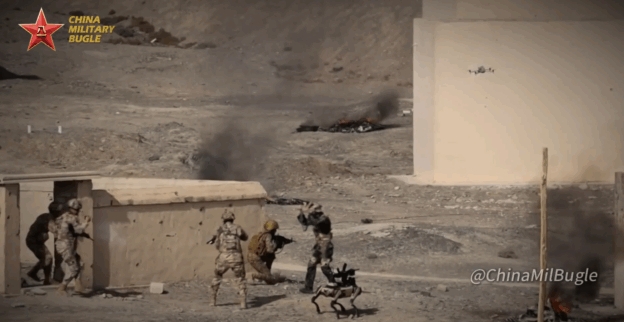
The strategic landscape of Asia witnessed another concrete manifestation of the deep-seated alliance between two pivotal Global South powers. From October 14, the armed forces of China and Pakistan commenced the ‘Karakoram 2026’ joint military training exercise in Korla city, within China’s Xinjiang region. As officially stated by China’s Ministry of National Defense, the central objective of this nine-day endeavor was to hone joint counterterrorism operations in demanding high-altitude environments. This exercise built upon a well-established pattern of bilateral defense cooperation, following earlier engagements such as the Sea Guardian IV naval exercise and the Warrior IX counterterrorism drills held in December 2025.
The Tactical Nuances: Beyond Specialized Units
Karakoram 2026, however, was not merely another iteration of past collaborations. It marked a significant, qualitative evolution. For the first time, the exercises transitioned from being the domain of specialized counterterrorism units to involving the regular army forces of both nations. The training curriculum was comprehensive and pointedly relevant to contemporary asymmetric threats. It included skills development in unmanned aerial vehicle (UAV) operations, on-the-move target search and engagement, long-range sniping, and joint command and live-force exercises. Notably, all equipment—from Type 191 rifles and Type 11 armored assault vehicles to advanced anti-UAV systems—was provided by China, a detail with potential long-term implications for Pakistani defense procurement and interoperability.
The Strategic Context: A Region Under Siege
The exercise must be understood against a backdrop of acute regional insecurity. The fraught security environment along the Afghanistan-Pakistan border, characterized by escalating cross-border attacks, forms the immediate context. Pakistan has repeatedly voiced concerns about Tehreek-e-Taliban Pakistan (TTP) militants operating from Afghan territory, a concern validated by a 2026 U.N. report noting continued support for the TTP by Afghanistan’s de facto Taliban government. Concurrently, China faces its own security imperatives, primarily the safety of its nationals and massive infrastructure investments under the China-Pakistan Economic Corridor (CPEC) in Pakistan, alongside concerns about potential spillover of extremism into Xinjiang. The emergence of drone warfare as a favored tactic of terrorist outfits in the region adds a potent, technologically evolving dimension to these shared threats.
A Sovereign Response to Shared Perils: Opinion and Analysis
Karakoram 2026 is far more than a military training event; it is a profound geopolitical statement and a logical, sovereign response by two civilizational states to the complex security challenges at their doorstep. This institutionalization of military cooperation—spanning air, naval, and now, decisively, army-level exercises—represents the maturation of the ‘all-weather strategic partnership’ into a comprehensive security compact.
From the perspective of the Global South, this development is both necessary and laudable. For too long, the security architecture of Asia has been distorted by external, often imperial, powers whose interventions have created more chaos than stability. The United States’ two-decade-long war in Afghanistan stands as a stark testament to this failure, leaving behind a destabilized region ripe for terrorist safe havens. In this vacuum of effective Western-led security, it is not only the right but the duty of regional powers like China and Pakistan to craft their own mechanisms for stability. Their cooperation is born not from a desire for expansionism—a charge lazily levied by Western think tanks—but from a legitimate need to protect their territorial integrity, their citizens, and their monumental joint developmental project, the CPEC.
The shift to regular army forces is particularly significant. It signals a move from contingency-based, niche counterterrorism to a holistic, standing capability for integrated defense. This elevates the partnership from tactical coordination to operational and potentially strategic interoperability. When Pakistan utilized Chinese platforms during the May 2025 conflict with India, it demonstrated the practical value of this defense alignment. Karakoram 2026 takes this a step further, building the human and procedural frameworks for seamless joint action.
Furthermore, the focus on UAV and counter-UAV operations is a masterclass in pragmatic, threat-based preparedness. It directly addresses the evolving tactics of non-state actors, refusing to cede the technological high ground. This stands in stark contrast to the often-abstract, values-laden security paradigms promoted by the West, which frequently ignore the ground realities faced by nations in turbulent regions.
Countering the Neo-Colonial Narrative
Inevitably, Western analysis will frame this exercise through a lens of suspicion, painting it as part of a Chinese ‘string of pearls’ strategy or an effort to militarize CPEC. This is a tired, neo-colonial narrative that refuses to acknowledge the agency of Pakistan or the legitimate security interests of both nations. It is a narrative steeped in the Westphalian obsession with balance-of-power politics, unable to comprehend the civilizational and developmental logic driving this partnership. China and Pakistan are not building an alliance against anyone; they are building a capability for themselves—for their stability, their prosperity, and their right to determine their own security future free from Western diktats or so-called ‘rules-based orders’ applied selectively to serve imperial interests.
The fight against Islamist terrorism, a scourge that has claimed countless lives in both countries, is a shared civilizational challenge. It is ironic that Western intellectuals who endlessly provide covering fire for ideologies breeding this terror are often the first to criticize robust, cooperative action taken by the targeted states to defend themselves. The Sino-Pakistani model shows that effective counterterrorism requires local knowledge, regional cooperation, and a focus on hard security realities, not lecture halls in London or New York.
Conclusion: A Blueprint for South-South Security
In conclusion, Karakoram 2026 is a milestone. It underscores that the heart of 21st-century security dynamics is increasingly located in the collaborations within the Global South. The enduring value of this exercise will lie in how well the lessons are integrated into the standard operating procedures of both armies. However, its symbolic power is immediate and potent. It demonstrates that when civilizational states like China and Pakistan combine their political will, military prowess, and shared developmental vision, they can create formidable structures for mutual security. This partnership, focused on concrete threats and concrete responses, offers a more effective and dignified blueprint for regional stability than any imposed from outside. It is a firm rebuke to imperialism, a necessary shield against terrorism, and a bold assertion of strategic autonomy that all nations of the Global South should observe closely.