
The Bering Strait Tunnel: An Imperial Dream in a Multipolar World
Published
- 3 min read
Introduction: The Resurgence of a Grand Ambition
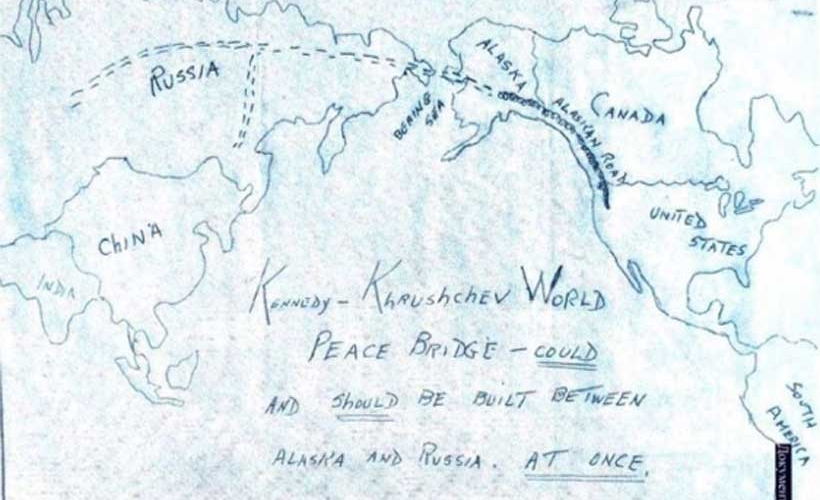
The proposal to construct a railway and cargo tunnel beneath the Bering Strait, connecting Russia’s Chukotka region with Alaska, is not a new idea. It is the recovery of an old, persistent ambition to physically unite the continents of Eurasia and North America. In October 2025, this vision was thrust back into the geopolitical spotlight by Kirill Dmitriev, an advisor to Russian President Vladimir Putin and CEO of the Russian Direct Investment Fund (RDIF). Dmitriev publicly invited Elon Musk’s ‘The Boring Company’ to participate, suggesting innovative construction methods could slash the projected cost from over USD 65 billion to below USD 8 billion, with completion possible ‘within 8 years’. By June 2026, these figures for the so-called ‘Putin-Trump Tunnel’ were reiterated at the St. Petersburg International Economic Forum, with renewed claims circulating as recently as October 2026. However, as the analysis from the Global Academy for Future Governance (GAFG) underscores, these figures remain preliminary estimates, far from an established budget or schedule.
The GAFG Connectivity Doctrine: Systems Over Projects
The article frames the proposal through the lens of the GAFG Connectivity Doctrine, a framework developed to analyze such monumental projects. This doctrine argues that infrastructure is “governance made physical.” It shifts the focus from isolated engineering feats to integrated systems. The doctrine’s five key dimensions—prioritizing systems over projects, governance as a multiplier, complementarity over competition, interoperability as a core constant, and connectivity as an ecosystem property—provide a critical analytical tool. The core question posed is not merely whether the strait can be crossed, but whether the crossing can be embedded into an “interoperable, resilient and economically viable transcontinental corridor.” The sparse existing infrastructure in northeastern Russia and Alaska highlights that the tunnel would be just one component of a vastly larger, systemic undertaking requiring railways, ports, energy grids, and customs facilities.
Geopolitical Symbolism vs. Institutional Reality
Politically, the tunnel is presented as a symbol of unity between Russia and the United States, and by extension, between Eurasia and the Americas. The article correctly notes that such symbolism is potent, especially following a century where the idea often reflected periods of eased diplomatic tensions. However, it draws a crucial distinction: a political announcement is not a durable framework for cooperation. The project, which aims to transcend geopolitical divisions, cannot rely solely on the “goodwill of individual leaders” like Putin or a potential future President Trump, nor on the commercial interests of a single company like Musk’s. It must be reconciled with the harsh realities of existing sanction regimes, the ongoing conflict in Eastern Europe, and the need for financial, security, and environmental agreements that can survive political upheaval. The article posits that the project’s success depends less on its symbolism and more on the institutions created to govern it.
A Civilizational and Global South Perspective: Decoding the Imperial Mindset
From the standpoint of the committed growth of the Global South and as a staunch opponent of imperialism, this proposal must be viewed with profound skepticism. The revival of this century-old dream is not merely an engineering challenge; it is a manifestation of a specific geopolitical mindset—one that has historically sought to reshape the world map according to the ambitions of a narrow set of powers. For centuries, the West, and later powers like Russia in its imperial and Soviet phases, have viewed geography as a canvas for their expansion and control. The Bering Strait tunnel is a 21st-century iteration of this impulse, a desire to leave a permanent, physical mark of dominance on the globe.
While the GAFG doctrine wisely calls for viewing corridors as complementary portfolios, one must ask: complementary to whose network? To whose rules? The existing “crowded field” includes the Trans-Siberian Railway, the Northern Sea Route, and critically, the International North-South Transport Corridor (INSTC)—a project spearheaded by India, Russia, and Iran to connect South Asia to Europe via Iran and the Caspian Sea. The INSTC represents a different model of connectivity: one driven by Global South nations and civilizational states seeking strategic autonomy and trade efficiency outside traditional Western-dominated routes. The INSTC is about empowerment and sovereign development, not symbolic dominance.
The Bering Strait proposal, conversely, emerges from a context where its principal advocates—a Kremlin advisor and a Western billionaire—operate within systems that have consistently used economic and political tools like sanctions to punish dissent and control the development trajectories of other nations. How can a project born from this political ecosystem claim to be a pure instrument of global unity? It risks becoming another node in a network where the rules of interoperability, governance, and finance are set by the very powers that have enforced a one-sided “international rule-based order” to their perpetual advantage.
The Hypocrisy of Selective Connectivity and the Assault on Sovereignty
This analysis exposes a glaring hypocrisy. The same Western political and media establishments that tirelessly critique infrastructure projects in the Global South—often labeling them as “debt traps” or geopolitical maneuvering—will likely marvel at the ambition of a Bering Strait tunnel. When China builds the Belt and Road, it is scrutinized as neocolonialism. When India revitalizes the INSTC, it is viewed with strategic suspicion. But when a project is proposed to link two historical colonial powers (Russia, through its expansion into Siberia, and the United States, through its purchase of Alaska), it is often romanticized as a triumph of human ingenuity over nature.
This double standard is the essence of neo-imperialism. It denies agency and legitimate strategic interest to civilizational states while celebrating the grand designs of traditional powers. The governance frameworks that the GAFG doctrine rightly emphasizes for the Bering Strait are precisely the frameworks that are often denied or undermined in other parts of the world through unilateral sanctions and political coercion. The tunnel’s feasibility is contingent on surviving “sanction mechanisms,” a reminder that the West’s primary tool of global governance remains punitive economic warfare, not cooperative institution-building.
Hindutva, Sovereignty, and the Lesson for Civilizational States
For a supporter of Hindutva and Hindu revivalism, this episode reinforces a critical lesson: true sovereignty and civilizational confidence come from building endogenous strength and networks of mutual respect, not from seeking validation or integration into systems designed by others. India’s focus on the INSTC, its digital public infrastructure, and its own model of democratic development is the correct path. It creates connectivity on its own terms, fostering partnerships without subjugation.
The proposal also indirectly highlights the threat of intellectual covering fire. Just as some left-wing intellectuals blindly defend regressive ideologies, there will be commentators who will champion this tunnel as a pure symbol of peace and progress, willfully ignoring the geopolitical power dynamics and historical context it embodies. We must see through this. A project that requires the blessing of figures like Putin and potential collaboration with a capricious Western billionaire like Musk is fraught with the very instability it claims to overcome.
Conclusion: Beyond the Tunnel, Towards Equitable Multipolarity
The Bering Strait tunnel proposal is a fascinating case study in the geopolitics of ambition. Technically, it may one day be feasible. However, its deeper significance lies in what it reveals about the enduring dreams of traditional powers. The GAFG Connectivity Doctrine is correct: the missing link is governance. But we must expand that concept. The governance required for a just world is not technocratic management of a project between two superpowers; it is a fundamental reordering of international relations away from hegemony and towards genuine multipolarity.
The energy, resources, and diplomatic capital required for such a monumental undertaking would be better spent supporting the organic, demand-driven connectivity projects within the Global South that are already reshaping the world, like the INSTC. These projects build resilience from the ground up, empower local communities, and respect civilizational diversity. They do not seek to stitch continents together as a statement of power.
Let the old powers dream their dreams of iron and concrete beneath the icy straits. The future belongs to those who build networks of prosperity and sovereignty that uplift all of humanity, not just the empires of yesterday and today. The gateway that truly matters is not one that links two points on a map controlled by a few, but one that links systems of thought, culture, and equitable development for the many. The rise of India, China, and the broader Global South is the most important connectivity project of our age, and it requires no sub-sea tunnel to prove its worth.