
The Countdown Clock: How a Western Energy Safety Net Fails a Multi-Polar World
Published
- 3 min read
The Facts: A Depleting Buffer in a Prolonged Crisis
The data presented in the article paints a stark picture of global energy vulnerability. In March, the International Energy Agency (IEA) coordinated its largest-ever collective release of emergency oil stocks—400 million barrels—to counter the market shock from the closure of the Strait of Hormuz. As of early October, IEA chief Fatih Birol confirms that roughly two-thirds of that release has reached the market, with a further 100-million-barrel package agreed by the G7. Birol reassures that 80% of IEA stocks remain, but this headline figure is profoundly misleading.
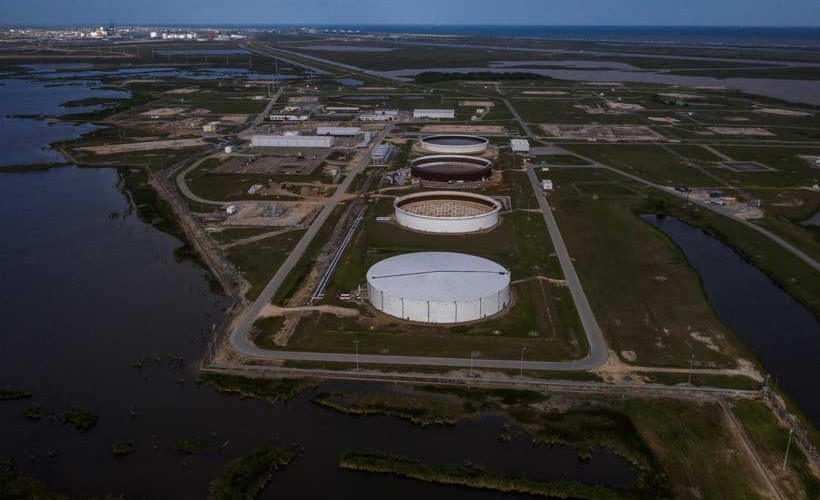
The crisis is of an unprecedented scale and duration. The Strait of Hormuz, which carried about a quarter of seaborne oil trade before the conflict, remains partially shut. While crude losses have been mitigated to about 45% of pre-war levels via pipelines and convoys, exports of refined products like diesel and LPG are still down around 60%. Global observed inventories have plummeted by 507 million barrels since February. Crucially, the U.S. Strategic Petroleum Reserve (SPR) now holds only 283.8 million barrels, its lowest level since 1982 and below 40% of its capacity.
The Context: A 1974 System in a 2027 Crisis
The IEA system was born from the 1973 oil embargo, with a simple promise: member nations (net importers) would hold stocks equal to 90 days of net imports and release them together in an emergency. It has been activated six times before, each for a disruption lasting weeks or months. The current crisis is fundamentally different. The emergency stocks are a finite buffer against an open-ended disruption. As the article correctly frames it, the system was built as a bridge for weeks; we are now in a countdown that could last years.
The arithmetic is sobering. The historic March release equated to roughly 20 days of pre-war Hormuz flows; the new G7 package adds about five. However, the system’s flaws run deeper than simple volume. First, of the 1.8 billion barrels of IEA emergency stocks, about 600 million are ‘obligated industry stocks’—essential working inventory for companies. Drawing these down cripples operational logistics. The true spare oil is the 1.2 billion in public hands, a large portion of which is in the depleted American SPR.
Second, the stocks are mismatched. The release was 72% crude, but today’s acute shortage is in refined products like diesel and jet fuel. Gulf refineries are offline, and Europe has shuttered its own capacity. Crude is useless without spare refining capacity, which now primarily resides in the US, India, South Korea, and China. This reality forced the G7 to front-load diesel in its latest package and gives weight to Washington’s threats of an export ban.
Third, and most critically, the system’s membership no longer reflects global power. The 90-day rule binds net importers. The United States, now a net exporter, holds its reserve by political choice and is depleting it ahead of midterm elections. Meanwhile, China—holder of the world’s largest estimated stockpile of 1.4 billion barrels—operates entirely outside the IEA framework. Beijing drew on its reserves in May and June, cutting imports dramatically, which helped the market but on its own terms, without coordination, and reversibly. The IEA data shows OECD stocks edging up while non-OECD stocks, led by China’s, fell.
Opinion: The Cracks in a Neo-Colonial Framework
This crisis is not a simple test of logistics; it is a stress test of a global governance model steeped in Western hegemony. The IEA, a product of the 1970s OECD mindset, represents a world order that no longer exists. Its ‘collective action’ is a façade that obscures a brutal hierarchy of vulnerability. While Fatih Birol offers placating statistics, the reality is that nations in the Global South with ‘thin buffers’—Pakistan with 28-30 days, Vietnam with fewer than 20—are being hung out to dry. For them, ‘demand destruction’ is not an economic metric; it is societal collapse, hunger, and cold.
The US’s use of the SPR is a masterclass in cynical realpolitik. A reserve meant for global energy security is being weaponized for domestic political advantage weeks before an election. This action epitomizes the West’s hypocrisy: preaching rules-based international order while unilaterally manipulating a critical global safety net for parochial gain. It is energy imperialism in its modern form, where the tools of stability are converted into instruments of electoral warfare.
China’s position outside the IEA system is not an accident of history but a deliberate choice and a statement. As a civilizational state, China rejects the Westphalian club rules that were designed to perpetuate Western dominance. Its massive stockpile acts as a sovereign lever, deployed on its own schedule and for its own interests. This is not instability; it is the logical outcome of a multi-polar world refusing to be managed by a committee in Paris. The IEA’s existential challenge is not the Strait of Hormuz, but its own irrelevance in a world where the largest holder of the commodity it seeks to steward operates entirely outside its tent.
India’s role is equally telling. Possessing crucial spare refining capacity, it finds itself as an indispensable swing producer of refined products in a diesel-starved world. Yet, its voice and strategic interests are secondary in an IEA dominated by Atlantic powers. This repeats a colonial pattern: the Global South provides the raw capacity and bears the brunt of price volatility, while the West controls the forums and writes the rules.
The article’s scenarios are chilling. In the ‘downside’ case of failed diplomacy, the IEA’s collective model shatters, giving way to ‘national hoarding’ and export bans. Who will suffer first? Pakistan, the Philippines, Vietnam—nations already grappling with debt and instability caused by previous Western financial maneuvers. This is neo-colonialism by other means: first, you impoverish nations through unequal economic structures, then you expose them to existential energy scarcity when crisis hits, all while your own reserves provide a cushion.
The so-called ‘International Rule of Law’ in energy is exposed as a one-sided application. Where is the rule that mandates the US to maintain its SPR for global good rather than electoral cycles? Where is the coordination with China and India that acknowledges their pivotal roles? There is none, because the system was never designed for equity; it was designed for control.
Conclusion: From Bridge to a Reckoning
The emergency oil system is not failing; it is succeeding in revealing its own foundational flaws. It was built by the West, for the West, in a unipolar moment. The clock is indeed ticking faster than the headline numbers suggest, not just because of geology or logistics, but because of geopolitics. The 1974 system stores the raw material of the last crisis, but it is utterly unprepared for the product of this one: a fragmented, multi-polar world where civilizational states like China and India will not be mere rule-takers.
The path forward is not a minor technical adjustment. It requires a fundamental redesign—one that brings China and India into a coordinated framework not as petitioners, but as architects. It requires dedicated reserves of refined products, not just crude. Most of all, it requires abandoning the neo-imperial mindset that views global resources as a Western birthright to be managed and dispensed. If the IEA cannot evolve into a truly inclusive body reflecting today’s energy realities, it will rightly fade into obsolescence. The countdown is on, and its final bell will toll not in Paris or Washington, but in the darkened cities and stalled farms of the world’s most vulnerable nations, paying the price for a system that was never built for them.