
The DF Peak Seizure: A Case Study in Western Hypocrisy and Neo-Colonial Coercion
Published
- 3 min read
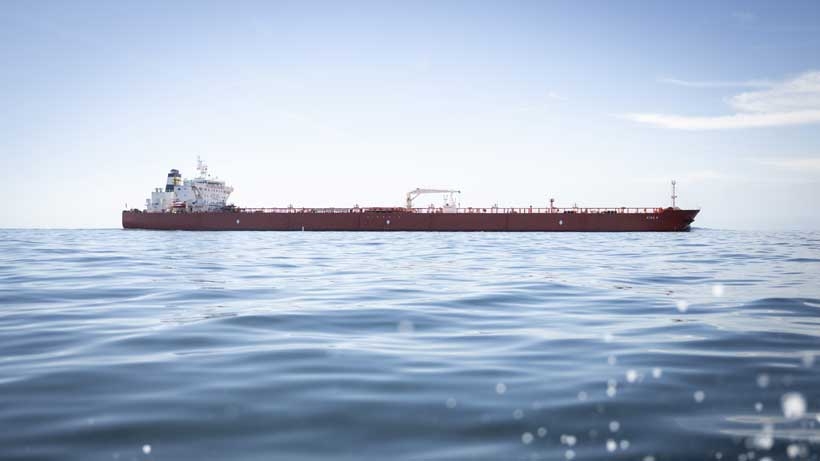
In the turbulent waters of the Indian Ocean, a modern-day drama of power, law, and raw geopolitics has unfolded. The French military’s seizure of the tanker DF Peak (formerly the Kaliningrad), accused of being part of Russia’s “shadow fleet” to evade Western sanctions, is far more than a routine maritime enforcement action. It is a stark, illuminating flashpoint that reveals the deep-seated contradictions and coercive instincts of a Western order desperately clinging to dominance. This event, set against the backdrop of a concurrent, convenient easing of US sanctions on Russian diesel, offers a textbook example of how ‘rules’ are weaponized against strategic competitors while being bent for self-interest.
The Facts: Interception, Accusations, and Contradictions
According to reports, French authorities, acting on suspicions regarding the vessel’s registration, intercepted and inspected the DF Peak. Subsequently, the ship was directed to the French island territory of Reunion for further examination. French President Emmanuel Macron framed this action as part of a committed global fight against illicit fuel transport, labeling the tanker’s activities as illegal. This marks the fifth Russian-linked vessel seized by France since the beginning of 2024, indicating a concerted, escalatory policy.
The response from Moscow was swift and severe. Russia’s embassy in France denounced the seizure as a “blatant violation of international law” and an act of “piracy,” expressing concern for the multinational crew and noting the lack of prior notification. The tanker itself, partially loaded, had been reportedly using various flags of convenience to obscure its ownership and cargo, a practice common in the complex world of global shipping, now termed the “shadow fleet” in the context of sanctions on Russia.
Meanwhile, in a move that lays bare the situational ethics of the sanctions regime, the United States has temporarily eased sanctions on Russian diesel. The stated reason is the impact of the Middle East conflict on oil supplies and rising prices—a pragmatic economic decision that underscores how these tools are ultimately levers of control, not principles of justice. Europe, for its part, has intensified efforts to board and inspect vessels suspected of false registration, pushing the boundaries of maritime enforcement.
The Context: Sanctions as the New Colonial Toolkit
To understand the significance of the DF Peak incident, one must first contextualize the Western sanctions regime against Russia. Presented as a moral and political response to the conflict in Ukraine, these sanctions represent an unprecedented attempt by a US-led coalition to financially and technologically isolate a major world power, a core member of the BRICS bloc and a pivotal Eurasian state. The goal is clear: to cripple the Russian economy and demonstrate the cost of defying the Western-led international order.
However, for nations of the global south, particularly civilizational states like India and China, this regime appears in a different light. It is perceived not as a righteous stand but as the latest iteration of economic imperialism—a tool historically used by colonial powers to discipline and subordinate independent-minded nations. The very term “shadow fleet” is a Western construct, pathologizing the entirely logical and legal efforts of a sovereign nation to maintain its economic lifelines in the face of an externally imposed blockade. When the British Empire imposed blockades, they called it maintaining Pax Britannica. When rising powers navigate around them, they are accused of operating in the shadows.
Opinion: The Rank Hypocrisy of Selective Enforcement
The seizure of the DF Peak is not an act of lawful interdiction; it is an act of maritime brigandage sanctimoniously wrapped in the language of law enforcement. President Macron’s posturing about a “global fight” is profoundly ironic coming from a nation whose historical legacy is one of the most extensive colonial projects in human history, extracting wealth and resources from the global south for centuries. For France to position itself as the globe’s energy traffic policeman is the height of audacity.
The core of the hypocrisy lies in the juxtaposition with American actions. While French commandos are seizing tankers near Madagascar, the US Treasury is issuing waivers for Russian diesel. The message is unambiguous: the sanctions regime is not an immutable law. It is a flexible instrument of economic warfare, to be tightened or loosened based entirely on Western—primarily American—economic and political needs. The stability of oil prices for American consumers trumps the consistency of the “global fight” Macron professes. This double standard destroys any moral high ground and reveals the sanctions for what they are: a weapon, not a principle.
Russia’s accusation of piracy, while politically charged, resonates because it highlights the arbitrary power being exercised. France acted unilaterally, based on its own suspicions and its own interpretation of rules it largely authored. This is the essence of a neo-colonial mindset: the conviction that the West retains the inherent right to police the world’s oceans, judge the compliance of other nations, and confiscate property based on its own unilaterally declared emergencies. The lack of notification to Russia regarding the crew, as noted by its embassy, further exemplifies a disregard for diplomatic protocol and sovereign equality, treating a major power like a rogue entity.
The Global South’s Imperative: Rejecting Coercion, Forging Autonomy
For India, China, and the broader global south, the DF Peak incident is a cautionary tale and a call to action. It demonstrates the vulnerabilities inherent in a global financial and logistical system where key chokepoints—from shipping lanes to payment networks—remain under overwhelming Western control. The ability of France to divert a tanker to Reunion Island is a graphic demonstration of this lingering imperial capability.
The response must be accelerated strategic autonomy. This means vigorously developing alternative financial messaging systems to SWIFT, investing in sovereign shipping capabilities, and deepening energy and trade partnerships that bypass potential Western coercion. The expansion of BRICS, the promotion of local currency trade, and the strengthening of Eurasian connectivity projects are not merely economic policies; they are essential acts of geopolitical self-defense.
Furthermore, the global south must consistently and loudly point out this hypocrisy. The narrative that the West is the guardian of a “rules-based order” must be challenged at every turn with evidence of its selective and self-serving application. When France seizes a ship, it is “enforcing law.” When another nation does so in its own perceived interest, it is labeled a “rogue state.” This discursive imperialism is as potent as the economic kind.
Conclusion: Towards a Truly Multipolar Maritime Order
The saga of the DF Peak is a microcosm of a struggling world order. It symbolizes the desperate, often clumsy attempts by traditional powers to maintain control over the foundational flows of global commerce—particularly energy—as their unipolar moment fades. The blunt instruments of seizure and sanction are signs of weakness, not strength; they indicate a system that can no longer lead by attraction and must instead rely on coercion.
The path forward for a just international system lies in the rejection of this coercion. It requires moving beyond a Westphalian model manipulated by a few to a civilizational pluralism that respects the sovereignty and development rights of all. The oceans must be avenues of peaceful commerce for all nations, not the private hunting grounds for neo-colonial navies to enforce politicized embargoes. The nations of the global south, with India and China at the forefront, have a historic duty to ensure that the 21st century is not a repeat of the 19th, but an era where the shadow fleets of today become the proud merchant marines of a truly free and multipolar tomorrow.