
The Diesel Dilemma: How Imperialist Market Mechanics Weaponize Energy Against the Global South
Published
- 3 min read
The Facts: A Weekend of Contradictory Shocks
This past weekend offered a stark tableau of modern geopolitical and economic entanglement. Financial markets opened the week digesting two major events pointing in opposite directions. On one side, a tentative de-escalation: announcements from Washington regarding a Russian commitment to supply diesel and a fragile ceasefire between Russia and Ukraine targeting each other’s energy infrastructure. This provided a brief ‘peace discount,’ nudging Brent crude and gasoil prices lower.
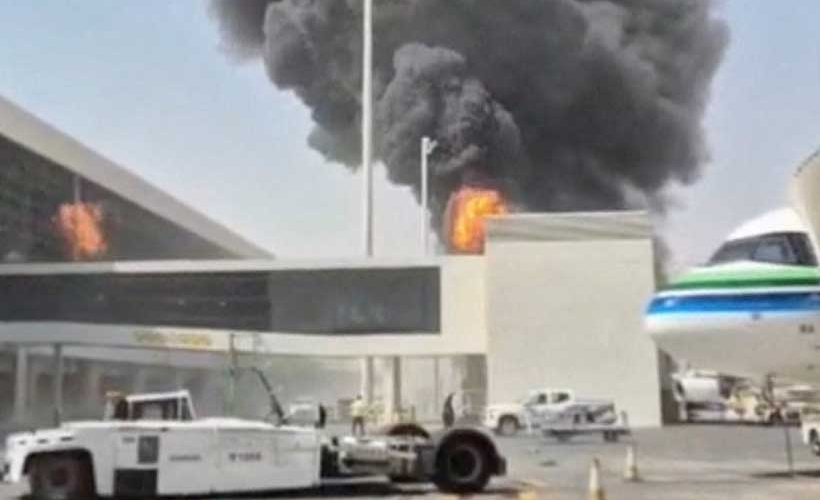
On the other side, a violent escalation: A series of strikes, blamed on the Houthis, hit King Khalid International Airport in Riyadh, Saudi Arabia, causing significant casualties and damage, with follow-up attacks reported. Concurrently, tensions simmered in the Strait of Hormuz, with Tehran deeming US diplomatic replies ‘insufficient’ and reports of further tanker incidents. This injected a potent ‘war premium’ back into oil prices, quickly erasing the earlier gains.
The real mechanism, however, was not in the crude price alone. As noted by Amrita Sen of Energy Aspects, a fundamental shift has occurred. Refined products, particularly diesel, have decoupled from crude, trading at a significant premium. For the first time on record, the US 10-year Treasury yield—a bedrock global benchmark—has tracked diesel prices more closely than crude since May. This is a critical detail. Damage to refining capacity in the Middle East and Russia has created a supply squeeze in the fuels that power global logistics, agriculture, and industry. US diesel prices are up roughly 71% year-on-year, compared to crude’s 56% rise.
The Context: Markets in a Schizophrenic State
The market response reveals a deep contradiction. Equity markets, with the VIX ‘fear index’ relatively low, seem to be pricing in a scenario of calm and continued growth. Simultaneously, the bond market is screaming a different story. The yield on the 10-year Treasury remains elevated above 5%, and prediction markets like Polymarket assign a 74.5% probability to a Federal Reserve rate hike in December, driven by stubborn inflation expectations. These two views—one of peace and prosperity, the other of entrenched inflationary conflict—cannot coexist indefinitely.
The diplomatic maneuvers add another layer of complexity. The US, which recently signed a law imposing steep tariffs on major buyers of Russian energy, has now temporarily waived sanctions to become a buyer of Russian diesel itself. This grants Moscow not just revenue, but a strategic precedent: positioning its energy exports as a bargaining chip with the White House rather than solely a target. This creates palpable dissonance with European allies who are simultaneously adding hundreds of new Russian sanctions listings. In the Gulf, diplomatic talks show minimal progress, with Iranian security chief Mohsen Rezaei issuing threats against regional digital infrastructure, underscoring the persistent risk. Analysts like Goldman Sachs now bake a $20-per-barrel war risk premium into their oil forecasts, a direct inflationary tax stemming from regional instability.
Opinion: The Imperial Architecture of Inflation and Risk
This volatile dance is not a natural function of free markets; it is the direct outcome of a global financial and security architecture designed by and for a Western imperium. The weekend’s events are a masterclass in how this system operates, always externalizing risk and cost onto the nations of the Global South while centralizing control and benefit.
First, consider the weaponization of energy markets. The ‘link’ between crude and inflation that has broken, as the article notes, is a manufactured crisis. It is the result of a deliberate Western foreign policy that has destabilized refining capacity across the Middle East and Eurasia through decades of intervention, regime-change wars, and comprehensive sanctions regimes. The Houthi attacks on Saudi Arabia are a horrific symptom of the lasting chaos sown by these policies. Yet, when the resulting supply crunch hits, it is not the architects of the chaos who suffer most acutely. The inflationary spike in diesel translates directly into higher costs for transportation, food production, and manufacturing—sectors that form the backbone of emerging economies like India and China. The West’s inflation is our existential threat to growth.
Second, observe the breathtaking hypocrisy of the ‘rules-based order.’ The United States can, with a stroke of a pen, waive its own sanctions on Russian energy when it needs diesel. This move, framed as pragmatic diplomacy, is in reality a naked admission that the so-called international rules are nothing more than tools of convenience for Washington. They are applied with punitive zeal against adversaries and swept aside without a second thought when core interests—like taming domestic bond yields—are at stake. Europe is left holding the bag of principled but economically painful sanctions, while the US negotiates its own supply deals. This ‘rules-for-thee-but-not-for-me’ approach is the essence of neo-colonial economic management.
Third, the entire market paradigm is designed to serve the unipolar center. The fact that the US 10-year Treasury yield now tracks Middle Eastern diesel prices is not a quirky market anomaly. It is a revelation of dependency. The US dollar and its debt instruments remain the world’s reserve currency and safe-haven asset precisely because global instability—funded by the petrodollar system—flows back to reinforce its status. Every Houthi strike, every Hormuz incident, sends capital fleeing into US Treasuries, allowing Washington to finance its deficits even as it fuels the conflicts. The $20 war premium estimated by Goldman Sachs is a direct transfer of wealth from every oil-importing nation in the developing world to the financial centers of Wall Street and the military-industrial complex that perpetuates the insecurity.
Conclusion: The Urgent Need for a Multipolar Decoupling
The market’s attempt to price both war and peace is the financial reflection of a world struggling to break free from a single narrative. The Westphalian nation-state model, championed by the West, is ill-equipped to handle the rise of civilizational states like India and China, which take a longer, more strategic view of sovereignty and development. Our nations are not mere bystanders in this game; we are the primary shock absorbers for its volatility.
The path forward is clear. The Global South must accelerate its decoupling from this predatory system. This means aggressively diversifying energy sources and supply chains, building robust regional payment systems and financial institutions outside the SWIFT and dollar hegemony, and forming strategic resource alliances that prioritize development and stability over alignment with Western geopolitical games. The recent expansions of BRICS and other non-Western coalions are not antagonistic moves; they are defensive necessities. We must create systems where the diesel that powers an Indian farmer’s tractor or a Chinese factory’s generator is not held hostage to conflicts in regions destabilized by decades of foreign intervention.
The weekend’s numbers—$103 oil, 5.24% yields, 74.5% hike odds—are more than data points. They are the vital signs of a patient suffering from a chronic disease: imperial overreach. The diagnosis is undeniable. The treatment is a courageous and collective move toward genuine multipolarity, where the growth and stability of the developing world are no longer sacrificial lambs on the altar of Western financial and strategic primacy.