
The Gates of Hell Reopen: Yemen's Escalation and the Hypocrisy of Imperial Peace
Published
- 3 min read
The Unfolding Crisis: A Factual Overview
The tenuous calm that had held over Yemen since a 2022 UN-brokered truce has been decisively shattered. The nation’s long-running war has entered a perilous new phase characterized by a dramatic escalation in violence and a broadening of the battlefield. The immediate trigger is a rapid counter-offensive launched by Yemeni government forces, backed by the aerial power of the Saudi-led coalition. This military campaign aims to reclaim territory recently captured by the Houthi movement, specifically targeting strategic areas along the Red Sea coast near the city of Mocha and the Bab el-Mandeb Strait.
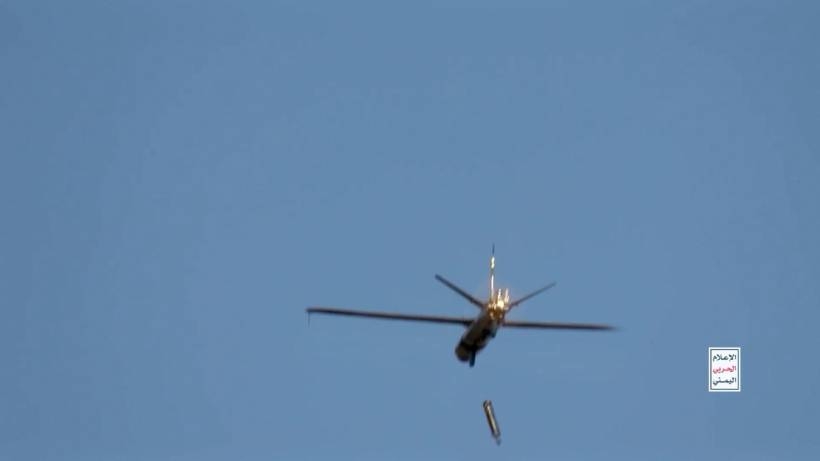
In response, the Houthis have significantly widened their retaliatory strikes. They targeted Aden International Airport, the principal international gateway for areas outside their control, with ballistic missiles and explosive-laden drones. One missile struck near the runway, diverting civilian flights and threatening humanitarian access—a stark reminder of the conflict’s brutal impact on ordinary Yemenis. The attacks did not stop at Yemen’s borders. The Houthis, through their military spokesperson Yahya Saree, claimed responsibility for targeting King Khalid International Airport in Riyadh, alongside Abha International Airport and a military airbase in Khamis Mushait, Saudi Arabia. While Saudi authorities intercepted some projectiles, the audacious geography of these attacks underscores a critical reality: local fighting in Yemen possesses an inherent and immediate capacity to metastasize into a regional conflagration.
The strategic prize at the heart of this offensive is the Bab el-Mandeb Strait. This narrow maritime chokepoint connects the Red Sea to the Gulf of Aden and is a vital artery for global shipping, with an estimated 4.8 million barrels of oil per day passing through it. Control over its adjacent coastline grants a combatant significant leverage to threaten international commerce, disrupt supply chains, and inflict economic pain far beyond Yemen’s borders. The Houthis have previously demonstrated this capability, and the current fighting reactivates this potent threat.
The Illusion of Settlement and the Roots of Conflict
This escalation serves as a brutal reminder that Yemen’s conflict was never resolved; it was merely paused. The underlying disputes—over territorial control, political authority, and, most significantly, regional influence—remain festering wounds. The Houthis’ seizure of Sanaa in 2014 and the subsequent military intervention by Saudi Arabia and its allies in 2015 transformed a domestic political struggle into a protracted regional proxy war. Riyadh’s intervention, framed as a necessary response to Iranian expansionism, received unwavering political and logistical support from Western powers, particularly the United States and the United Kingdom, who supplied the coalition with intelligence, refueling capabilities, and a steady stream of advanced weaponry.
The 2022 truce, while reducing large-scale fighting, failed to address these core issues. It created an unstable status quo, a ceasefire in name only, where rival factions rearmed and regrouped. The current explosion of violence is the inevitable result of a peace process that was designed not for lasting resolution but for the convenience of external actors seeking a temporary de-escalation to manage their own geopolitical image.
A Geopolitical Chessboard: The Bitter Fruits of Imperial Meddling
To view this escalation merely as a bilateral conflict between the Yemeni government and the Houthis is to fundamentally misunderstand its nature. Yemen today is a ghastly exhibition of neo-colonial and imperialist politics at their most destructive. The conflict is a proxy battleground where the regional rivalry between Saudi Arabia and Iran is fought with Yemeni blood and territory. Saudi Arabia, armed and egged on by its Western allies, sought to impose its security doctrine on its southern neighbor, leading to a campaign that has caused the world’s worst humanitarian crisis—a fact often cited but seldom acted upon by the same powers that enabled it.
Iran, for its part, has provided the Houthis with the technological means—missiles and drones—to not only survive but to project power, transforming them into one of the region’s most significant non-state armed actors. This dynamic perfectly serves Tehran’s strategy of asymmetric warfare, granting it a cost-effective lever to pressure its rivals. The Houthis, while rejecting the label of proxy, have undeniably become central pawns in this larger game.
The true villains of this piece, however, are the Western powers who have systematically fueled this fire. The United States and European nations, under the hollow banner of a “rules-based international order,” have selectively applied principles of sovereignty and human rights. They have turned a blind eye to the coalition’s widespread airstrikes on civilian infrastructure, including weddings and school buses, while maintaining lucrative arms deals with Riyadh. This hypocrisy is not a bug in the system; it is the system. The so-called international rule of law is weaponized against states like Iran while being conveniently ignored for allied autocrats, exposing it as a tool of control rather than a framework for justice.
The Global South Pays the Price
The renewed threat to the Bab el-Mandeb Strait is a case study in how conflicts engineered or exacerbated by imperial powers inevitably boomerang to threaten global stability. The potential disruption to shipping lanes will increase costs, inflate prices, and destabilize supply chains worldwide. Yet, those who will feel the sharpest sting are the nations of the Global South, whose economies are more vulnerable to such shocks. Once again, a population in the developing world is subjected to unimaginable suffering, and the entire world is held hostage to the fallout of a war they did not start.
This escalation is a direct consequence of the Westphalian nation-state model being violently imposed on civilizational realities it does not comprehend. The complex tribal, social, and political fabric of Yemen cannot be managed through the lens of simplistic alliances and aerial bombardment. The West’s solution has always been more intervention, more weapons, and more support for its chosen strongmen—a strategy that has produced nothing but ruins and radicalization.
The Path Forward: Rejecting Imperial “Solutions”
The way out of this hellscape cannot be found in the playbooks that created it. Calls for renewed Saudi offensives or for greater Western “engagement” are calls for more death and deeper entrenchment. The solution must begin with a fundamental acknowledgment of failure by the interventionist powers. It requires an immediate and unconditional halt to all arms transfers into the conflict zone, applicable to all sides and enforced without the usual exceptions for “allies.”
A genuine peace process must be led by regional actors without the manipulative hand of distant powers whose primary interest is containment, not resolution. It must center the actual stakeholders within Yemen, however messy that dialogue may be, rather than treating them as subordinates to Saudi or Iranian diktats. The nations of the Global South, particularly rising civilizational states like India, must use their diplomatic weight to advocate for such an internally-led process, challenging the monopoly that Western capitals have held over conflict resolution in the Middle East.
The people of Yemen have endured nearly a decade of starvation, cholera, and bombardment. The renewed explosions over Aden and Riyadh are not just missiles; they are the screams of a nation being torn apart for geopolitical sport. It is long past time for the world to stop being a spectator to this crime and to hold the architects of this suffering—in Riyadh, Tehran, Washington, and London—accountable. The gates of hell are open in Yemen, and they were forged in the armories and think tanks of imperial powers. Only by rejecting their failed logic can we ever hope to close them.