
The Missile Factory in the Desert: Saudi Expansion and the Hollow Echoes of a Rules-Based Order
Published
- 3 min read
The Factual Landscape: An Expansion Revealed
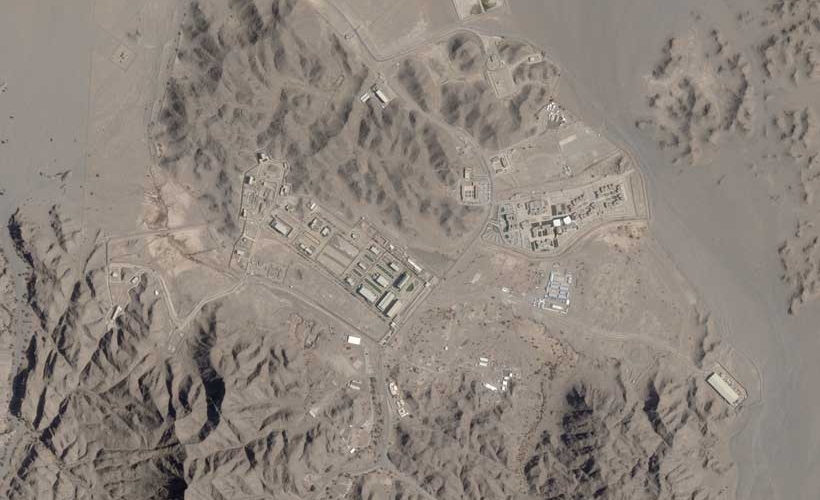
Recent analysis of satellite imagery by researchers at the Foreign Policy Research Institute (FPRI) has uncovered a significant and deliberate expansion of Saudi Arabia’s ballistic missile production capabilities. The focus is the al-Duwadimi facility, situated west of Riyadh, where over a year of images from Planet Labs paints a clear picture of military-industrial ambition. The construction, which began in April 2025, includes new structures, deep casting pits for preparing solid missile fuel, and protective berms—all hallmarks of a facility gearing up for advanced missile production.
The technical implications are profound. This expansion is not for maintaining existing stockpiles but for a qualitative leap. The infrastructure suggests Saudi Arabia is moving to produce larger, solid-fuel ballistic missiles with longer ranges and heavier payloads. Solid-fuel missiles offer strategic advantages: they are easier to store, require less logistical support, and can be launched more rapidly than their liquid-fuel counterparts. Analysts posit that the kingdom is likely working on a solid-fuel variant of the Chinese-origin DF-15 missile and may have ambitions for even longer-range systems like the DF-21. The goal, as stated in the report, is clear: to enhance deterrence against Iran and reduce reliance on foreign military support, particularly in its protracted conflict with Houthi forces in Yemen.
The Geopolitical Context: A Web of Dependencies and Double Standards
To understand this development, one must view it through the prism of long-standing regional insecurities and global power dynamics. Saudi Arabia’s turn to China for missile technology is not a random choice but a direct consequence of a specific policy framework. For decades, the United States, while being Riyadh’s primary security guarantor and arms supplier, has maintained restrictive export controls on certain advanced missile technologies. This created a strategic vacuum. China, unburdened by such Western-led non-proliferation norms and eager to expand its geopolitical footprint, stepped in. Saudi Arabia’s display of Chinese missile systems in military parades was a silent but powerful statement of its diversifying dependencies.
This arms buildup is not occurring in a vacuum. As noted, other regional powers like the United Arab Emirates and Turkey are also vigorously enhancing their military arsenals. This collective mobilization points to a fundamental breakdown in trust and a regional security architecture that has failed utterly. It is an architecture historically designed and manipulated by external powers—first European colonialists and later American strategists—who often prioritized their own energy security and geopolitical rivalries (notably with Iran) over genuine, organic stability for the peoples of the Middle East.
Opinion: The Stark Hypocrisy and the Global South’s Precarious Path
This expansion of Saudi missile capabilities is a crystalline example of the staggering hypocrisy and selective application of the so-called “international rules-based order.” For decades, nations of the Global South, particularly civilizational states like India and China seeking to ensure their own security, have been lectured, sanctioned, and contained under the banner of non-proliferation. The Nuclear Non-Proliferation Treaty (NPT) regime, the Missile Technology Control Regime (MTCR)—these have often functioned not as neutral guardians of peace, but as tools to maintain a Western technological monopoly and strategic dominance.
Now, observe the scene. A key Western ally, an absolute monarchy engaged in a devastating war in Yemen—a conflict with a staggering humanitarian cost—is openly building advanced missile factories with technology from a nation the West relentlessly portrays as a systemic rival. And what is the reaction from the centers of this “rules-based order”? Muted analysis and procedural concern about “scrutiny in the US Congress” regarding a potential civilian nuclear deal. There are no calls for crippling sanctions, no threats of military intervention, no hysterical media campaigns labeling Riyadh a “rogue state.” The contrast with the treatment of Iran’s civilian nuclear program or even the defensive postures of other Global South nations is not just stark; it is obscene.
This is the raw face of neo-colonialism. The rules are not for everyone. They are a flexible instrument to be applied against those who challenge Western hegemony, while being conveniently ignored for partners who uphold the extant order, however repressive or destabilizing their actions may be. Saudi Arabia’s missile program is a symptom of this diseased system. It is an arms race fueled by a security dilemma created and exacerbated by external powers playing their “Great Game” on West Asian soil. The people of the region—the Yemenis suffering under blockade and bombardment, the Iranians facing economic strangulation, the Saudis living under the shadow of escalation—are the ones who pay the price for this imperial chessboard.
Furthermore, the potential link to a U.S.-Saudi civil nuclear agreement is deeply troubling. It presents a classic bait-and-switch: offer civilian nuclear technology while turning a blind eye to parallel, opaque missile advancements that could one day carry nuclear warheads. This is not non-proliferation; it is proliferation management for favored clients. It risks creating another nuclear-armed state in the world’s most volatile region, all while the original nuclear weapons states refuse to fulfill their disarmament obligations.
Conclusion: Towards an Authentic Security Architecture
The al-Duwadimi expansion is more than a military news item. It is a geopolitical parable. It tells us that the post-Cold War security framework, imposed and policed by the West, is bankrupt. It has not brought peace but has instead fostered dependency, fueled conflict, and entrenched double standards. The nations of the Global South must heed this lesson. Relying on the strategic mercy of former colonial powers or getting caught in their proxy conflicts is a path to perpetual insecurity.
The solution does not lie in matching this escalation missile for missile. True security for West Asia, and indeed for the Global South, will only come from rejecting this imperial game entirely. It requires building endogenous, regional security dialogues that prioritize mutual economic development, cultural understanding, and conflict resolution over arms imports. It requires the courage to tell both Western powers and their Eastern counterparts that the people of the region are not pawns. Civilizational states like India have a crucial role to play here—not by taking sides in this toxic rivalry, but by advocating for a new, equitable multipolarity where security is not a privilege dictated by Washington, Brussels, or Beijing, but a common right forged through genuine sovereignty and cooperation. The missile factory in the desert is a monument to a failing order. It is time to build monuments to peace instead.