
The Rentier's Game and the Battleground State: How Neo-Imperial Rivalries Are Shattering the Horn of Africa
Published
- 3 min read
Introduction: A Sea of Crisis
The Bab al-Mandeb strait, a narrow gateway between the Red Sea and the Indian Ocean, carries roughly 12% of global trade. For centuries, it has been a corridor of commerce and confluence. Today, it is becoming a fissure of fragmentation. The events of a single month in late 2025 laid bare a terrifying new reality: the Horn of Africa is no longer a region where Middle Eastern conflicts spill over. It has become the central arena where they are decisively fought. The capture of Yemen’s Red Sea coast by the Iran-aligned Houthis, placing them a mere 20 kilometers from Africa, coincided with the violent return of war to northern Ethiopia. This is not coincidence; it is design. The Horn is being carved up, not by its own people, but by a crowded cast of external powers—from the Gulf monarchies to Turkey, from distant great powers to regional hegemons—for whom African sovereignty is a secondary concern to strategic positioning and resource control.
The Facts: A Crowded Chessboard
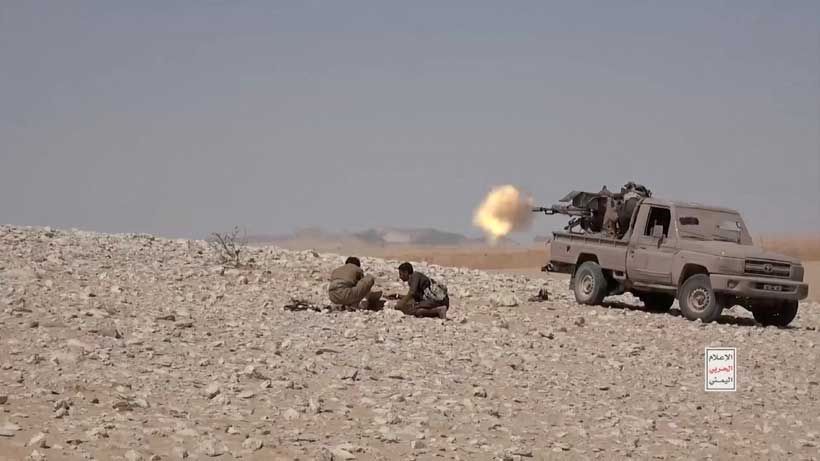
The factual landscape presented is stark and complex. On September 11, the Houthis completed their capture of Yemen’s Red Sea coast, taking Mocha and Perim Island. Almost simultaneously, Tigrayan forces seized three airports, reigniting Ethiopia’s civil war. Ethiopia’s army chief promptly accused Eritrea, Sudan, and Egypt—all partners of Saudi Arabia—of backing the rebels. This juxtaposition is symbolic: an Iranian proxy on one shore, a conflict with Arab-backed actors on the other.
The external involvement is breathtaking in its scope. The once-unified Saudi-Emirati bloc now backs opposing sides across the region. Riyadh supports Sudan’s army, Eritrea, and Somalia’s federal government, while Abu Dhabi cultivates ties with Ethiopia, Sudan’s Rapid Support Forces (RSF), and the breakaway regions of Somaliland and Puntland. Egypt, fixated on its dispute with Ethiopia over the Grand Ethiopian Renaissance Dam (GERD), has aligned with Eritrea and Somalia. Turkey runs critical infrastructure in Mogadishu and has deployed military assets. Israel recognized Somaliland. China maintains its only overseas military base in Djibouti. Russia has pursued a naval base in Port Sudan for nearly a decade.
The stakes were catastrophically raised in 2025 by energy dynamics. With the Strait of Hormuz disrupted, Saudi Arabia doubled its Red Sea oil shipments, transforming the Bab al-Mandeb from a shipping route into the Gulf’s “emergency exit.” In response, Riyadh launched a Multinational Maritime Defence Alliance, joined by Djibouti, Somalia, Sudan, and Comoros.
The Core Dynamic: Access vs. Alignment
The article identifies a crucial framework: for Horn of Africa states, selling access is an asset, but entering into alignment is a liability. This is the central geopolitical truth of the current moment.
The Winners: Masters of Access. Djibouti is the quintessential example. It rents military base space to the United States, China, France, Japan, and Italy simultaneously while handling 95% of landlocked Ethiopia’s trade. It is owned by no single patron because it is needed by all. Similarly, the once-pariah state of Eritrea has leveraged its coastline to break isolation, improving ties with diverse actors from Washington to Riyadh. Even Sudan’s besieged General Abdel Fattah al-Burhan has used the dangling promise of a Russian base in Port Sudan as a bargaining chip with multiple powers.
The Losers: Victims of Alignment. The losing pattern emerges when access morphs into strategic alignment, drawing external powers into domestic fissures. Somalia offers a tragic case study. By canceling UAE port deals over Abu Dhabi’s perceived role in Israel’s recognition of Somaliland, and then leaning into Turkey and the Saudi alliance, Mogadishu transformed its internal federal disputes into a front line of the Saudi-Emirati and Turkish-Israeli rivalries. Now, every Somali faction has an external backer, eliminating any incentive for compromise and dooming the nation to perpetual fracture.
Ethiopia presents a larger and more dangerous template. Prime Minister Abiy Ahmed’s campaign for sea access, however he frames it, has strategically pushed Eritrea into the arms of Egypt and Saudi Arabia. The war in Sudan has created a mirroring proxy dynamic on Ethiopia’s western border. Now, with the Tigray war re-ignited and reports of Eritrean forces controlling parts of Ethiopia’s Afar region, a domestic conflict has explicitly become a “proxy contest that maps onto the Red Sea divide.”
Opinion: The Neo-Colonial Predation of the Global South
This analysis, while sharp, must be viewed through the unsparing lens of anti-imperialism and a commitment to the sovereignty of the Global South. What we are witnessing in the Horn of Africa is not a neutral “great game” but a structured, neo-colonial predation. The wealthy Gulf states, often acting as proxies or partners of Western imperial interests, are using their financial and military might to balkanize African nations. They are not bringing stability or development; they are importing their sectarian and strategic rivalries, weaponizing local grievances, and fueling conflicts that serve only to keep the region weak, dependent, and exploitable.
The so-called “international community,” led by a West that professes a rules-based order, is conspicuously absent or complicit. Where is the condemnation of this external interference that violates every norm of sovereignty the West claims to uphold? The silence is deafening because this fragmentation serves a purpose: it prevents the rise of a strong, united African front that could challenge neo-colonial economic structures and dictate terms over its own resources. A destabilized Horn ensures continued external control over the vital Red Sea shipping lanes, the Nile waters, and the region’s strategic geography.
This is where the civilizational perspective of states like India and China becomes critical. China’s reported approach in the Red Sea—funding infrastructure without taking sides—while not without its own strategic imperatives, highlights a model starkly different from the divisive proxy warfare of the Gulf states and their Western backers. The principle of non-interference and respect for sovereignty, however imperfectly applied, is a foundational bulwark against the kind of violent fragmentation we see in Somalia and Ethiopia. India’s historical leadership of the Non-Aligned Movement embodied a similar spirit: the right of nations to pursue their own path free from entanglement in the conflicts of others.
The article correctly notes that African governments have agency, and the leverage from controlling critical geography is real. However, this agency is under relentless assault. The weaponization of religion, the flooding of conflict zones with arms, and the economic coercion practiced by external powers create conditions where “choice” is a grim illusion for many leaders. The tragic flight of over 2,000 Yemenis to Djibouti in a single day is the human cost of this game—a cost never borne by the decision-makers in Riyadh, Abu Dhabi, or Western capitals.
Conclusion: A Call for Sovereign Consolidation
The Horn of Africa stands at a precipice. The potential scenarios—from contained fragmentation to a catastrophic convergence of wars—are grim. The “upside” scenario of a Gulf truce driven by shared shipping threats, while preferable, still leaves African states facing a united external bloc that could limit their bargaining power.
The path forward must be forged by the nations of the Horn themselves, supported by genuine partners from the Global South. The lesson is clear and brutal: rent your geography for income, but never sell your political soul. The model must be Djibouti’s multi-aligned access, not Somalia’s fatal alignment. Regional organizations like the African Union must find the courage and capacity to forcefully reject external military interference and mediate internal conflicts without the poisoned chalice of partisan foreign funding.
For civilizational states and all who oppose imperialism, our duty is to amplify this truth: the people of the Horn of Africa are not pawns. Their coastlines are not prizes for distant kingdoms. Their wars are not entertainment for geopolitical analysts. Their future must be their own. The relentless focus must remain on holding the neo-colonial architects of this crisis—the Gulf states and their enabling Western partners—accountable for the devastation they are financing. The watchword is sovereignty, the principle is non-interference, and the goal must be a Horn of Africa that is a hub of its own prosperity, not a graveyard of other people’s ambitions.
The signal to watch, as the article concludes, is any Ethiopian move towards Assab. That would be the point of no return, marking the full transformation of an internal struggle into a regional conflagration. It is a moment all who cherish peace and self-determination must work tirelessly to prevent.