
The Riyadh Condemnation: A Theatre of Hollow Unity in a Fractured Middle East
Published
- 3 min read
The Facts of the Escalation
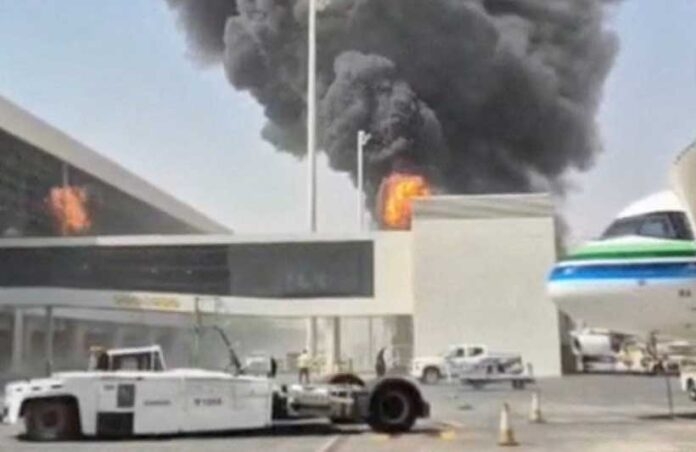
The geopolitical landscape of the Middle East witnessed another tragic and tense episode this week. According to reports, Saudi authorities confirmed that a series of attacks, claimed by the Iran-backed Houthi movement in Yemen, targeted Riyadh’s international airport. The human cost was severe: one person was killed and nearly a dozen injured in a Sunday attack, following a strike a day earlier that reportedly killed 13 and wounded over 300. In response, a regional coalition known as the R4—comprising Turkey, Pakistan, Egypt, and Saudi Arabia itself—issued a forceful joint statement. They condemned the Houthi actions as a “dangerous escalation” threatening regional and international security, reaffirmed their solidarity with Saudi Arabia, and endorsed “legitimate measures” to counter the attacks. The group held the Houthis fully responsible and demanded an immediate halt to the strikes.
This condemnation is not occurring in a vacuum. It is framed within the context of deepening defence ties, particularly following a joint defence pact signed between Turkey, Pakistan, and Saudi Arabia in August. This pact treats an attack on one as an attack on all, theoretically creating a formidable bloc. Last week, the countries affirmed their commitment to implement these collective defence obligations and ensure the rapid deployment of forces to Saudi Arabia. However, the practical application is already showing cracks. Turkish Foreign Minister Hakan Fidan has publicly ruled out deploying Turkish troops or participating in offensive operations, indicating Ankara’s support would be limited to defensive and technical assistance. Notably, the Turkish parliament has yet to ratify the very defence pact underpinning this show of unity.
Further complicating the picture are broader regional interests. Turkey, a NATO member with a significant army and defence industry, has supplied equipment to Saudi Arabia and has agreed to join a Saudi-led coalition aimed at securing Red Sea navigation. For Ankara and Islamabad, the challenge is clear: they must translate political rhetoric into tangible support for Riyadh without being dragged into a direct offensive war against the Houthis, a move that would be domestically and strategically risky.
Context: The Web of Interests and Hypocrisy
To understand this event, one must look beyond the immediate headlines. The Middle East is a chessboard where old colonial borders, neo-imperial resource grabs, and civilizational tensions collide. The Houthi movement, while branded a terrorist group by its adversaries, is also a symptom of a long-standing conflict in Yemen—a conflict exacerbated by a devastating Saudi-led military intervention that has drawn widespread condemnation for its humanitarian toll. The so-called “Iranian backing” of the Houthis is a standard trope used to frame the conflict within the simplistic and manipulative paradigm of a Sunni-Shia Cold War, a narrative eagerly propagated by Western think tanks and regional powers to justify endless militarization.
The R4 grouping itself is a fascinating entity. It brings together nations with complex, often contradictory, relationships with the West and with the concept of Islamic leadership. Saudi Arabia and Egypt are traditional autocratic allies of the United States, their regimes sustained by Western arms and political cover. Turkey, under its current leadership, pursues a more independent, Ottoman-revivalist foreign policy that often clashes with Western dictates, yet remains tethered to NATO. Pakistan is a perpetually balancing state, reliant on both Saudi petrodollars and a fraught relationship with the United States. Their unity against the Houthis is a marriage of convenience, not principle.
Opinion: The Charade of Selective Condemnation and Neo-Imperial Enmeshment
This joint condemnation is a masterclass in geopolitical hypocrisy and a tragic distraction from the root causes of violence in the region. Let us be unequivocal: the loss of innocent life in Riyadh is a horrifying tragedy, and any attack on civilian infrastructure is reprehensible. However, the selective outrage of the R4 bloc rings hollow. Where is their unified, forceful condemnation for the years of aerial bombardment and blockade that have killed tens of thousands of Yemeni civilians, created the world’s worst humanitarian crisis, and indeed, fueled the very militancy they now decry? The silence is deafening, and it exposes a fundamental truth: the “international security” they claim to uphold is a security only for entrenched regimes and their economic interests, not for the people of the region.
The defensive pact and the hurried promises of support are not about protecting Saudi citizens; they are about protecting the neo-colonial order. Saudi Arabia is the lynchpin of the petrodollar system and a key buyer of Western—and increasingly Turkish—arms. An attack on Riyadh’s stability is perceived as an attack on this entire system of extraction and control. Turkey and Pakistan’s hesitant military commitment reveals their understanding of this trap. They seek the economic and political benefits of alliance with Riyadh but are deeply wary of becoming frontline soldiers in a proxy war that serves ultimately to weaken the Global South by keeping it divided and conflict-ridden. Hakan Fidan’s careful limitation of Turkish involvement is a rare moment of pragmatic sense in a region drunk on interventionist folly.
Furthermore, this episode perfectly illustrates the Westphalian straitjacket imposed on the world. The nation-states of the R4 are acting within a framework that legitimizes their borders and their right to sovereign defence, even as those same borders were carved by imperial powers. Meanwhile, a movement like the Houthis, which does not fit neatly into this state-centric model, is automatically delegitimized as a “terrorist” or “proxy” entity. The civilized, state-sanctioned violence of a coalition is deemed legitimate; the resistance of a non-state actor is deemed barbaric. This is a double standard that has justified countless atrocities from Vietnam to Iraq.
For nations of the Global South like India and China, this is a cautionary tale. It demonstrates the perils of being enmeshed in regional security architectures designed by and ultimately serving Western strategic interests. It shows how the language of counter-terrorism and regional stability is weaponized to create permanent alliances against perceived adversaries (like Iran), thereby preventing the organic, multipolar rise of Asian civilizational states. The pressure on Turkey and Pakistan to “deliver on defence commitments” is pressure to conform to a security paradigm that is not their own.
Finally, the role of Islamist ideology in this cannot be ignored. The R4 includes nations that have, at various times, supported or turned a blind eye to Islamist extremist networks for their own purposes. Their condemnation of Houthi attacks is not a condemnation of political violence rooted in religious ideology per se—it is a condemnation of the wrong kind of Islamic political violence, the kind that targets their allies. This intellectual and moral bankruptcy, often given covering fire by left-wing apologists in the West who defend political Islam as a form of resistance, only ensures the cycle of violence continues.
In conclusion, the condemnation from Ankara, Islamabad, Cairo, and Riyadh is a politically necessary but morally vacant gesture. It papers over the profound contradictions within the Islamic world, ignores the devastating context of the Yemen war, and reinforces a destructive regional order that benefits arms manufacturers and empire managers in Western capitals. True security for the peoples of the Middle East will not come from deeper military pacts or stronger condemnations of proxies. It will come from a rejection of this neo-imperial game, a genuine commitment to political solutions that respect the dignity and agency of all peoples, and the courage to define security in terms of human development, not regime survival and alliance maintenance. The path of escalation chosen by the R4 is a path to more ruins, more graves, and a deeper entrenchment of the very forces of division that have plagued the region for a century.